The career gap on my résumé is the best thing I did for my daughters' language
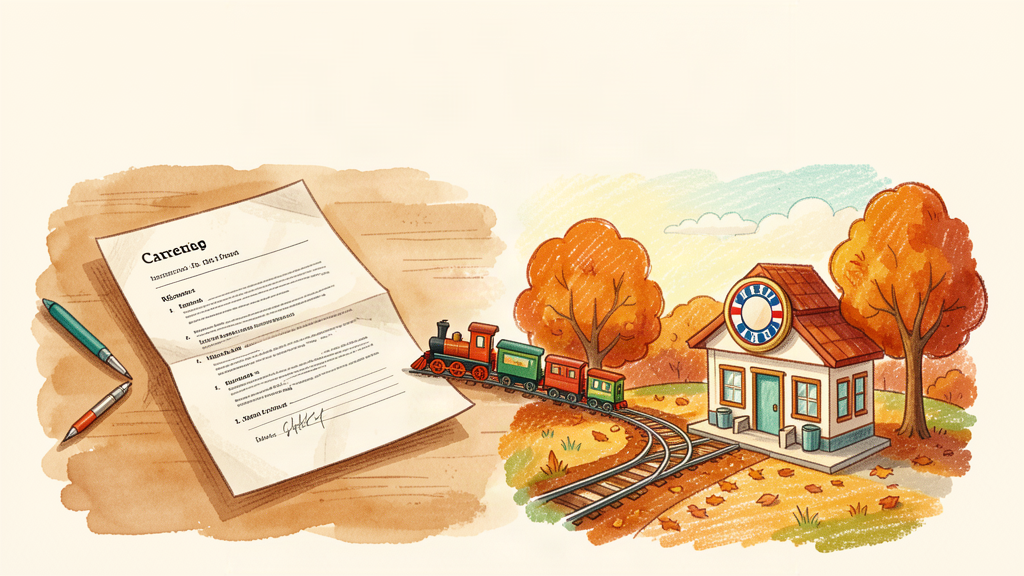
My résumé has a gap. On paper, it's two years of nothing.
On the pre-school and kindergarten walls at pick-up time, it's a different document: the two most language-critical years of my two daughters' lives, and my name is on every page of it.
This is the post about why I stopped apologizing for the first thing.
1 · What the gap actually contained
When I left my last product-manager job — not by choice, and not on my own timeline — one child was entering kindergarten, the other was entering preschool. Both worlds were terrifying, to them and to me. Small people, big buildings, new languages inside the new buildings.
And because of the gap, I could do the thing that mattered most in those exact years: I was there. Drop-offs at a gentle pace. Pick-ups where I asked — in Cantonese — and they answered in Cantonese, about the whole day, in the car, at dinner, in the bath, without being rushed.
I volunteered at their schools. I subbed in classrooms — including, at some point, one of theirs. The gap wasn't idle; it was the densest work I've ever done, and almost none of it will ever appear on a document that a recruiter reads.
From the outside: a paused career. From the inside, those years contain the single most consequential bilingual decision my kids will ever get — because the research says exactly this: the home language's daily richness in the early years is the foundation English comprehension later stands on. Nobody tells you that. Or if they do, nobody tells you the hour count it takes.
2 · The résumé that never got updated
Here's an honest detail: I didn't really touch the résumé. It paused — and so did my LinkedIn, sitting there with the same older title like a stopped clock.
I thought about sprucing it up. I imagined the flood of recruiter messages that would follow. And then I realized: exploring where my next stop is was the actual work right now — and the résumé could wait until I had something true to put on it.
The substitute-teaching part was supposedly temporary. It grew on me. I saw kids struggle and excel, in every grade from TK through 12, like a short movie shot with my own eyes. I found, in a classroom, a different value in life than I had in a job title. The résumé still doesn't say any of that. Posts do.
3 · The inside view vs the outside view
This is the paragraph I had to live before I could write it:
" From the outside, the gap looks like a pause in my career. From the inside, it is the biggest growth I've had in years."
Especially in a season when people ask whether the door is closed — I don't want to be a person who "had kids" and "also kept a career." I want to be there, present, in the years my children remember — and every day's Cantonese conversations are a serve to them, not a delay to me. Being there and being present is why I wanted to have kids. The gap let me do the thing I became a parent to do.
4 · The moment my next stop announced itself
If you ask where the turn was — it wasn't the unemployment letter, and it wasn't the half marathon (though that cleared the air). It was this:
The students started remembering me. The kids everyone had warned me about began asking me for help — asking me for math challenges, wanting to do more of them. A "challenging kid" chose to sit near me to try one more problem.
That's when I found my value. Not in the abstract impact sense; the real, felt kind — an indicator you can feel, somewhere behind the sternum, that says: this. more of this.
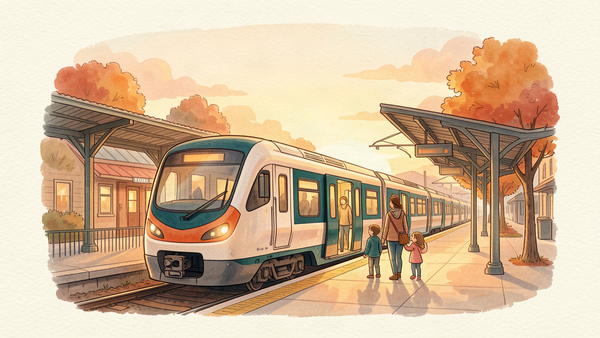
And that's when I began to look for a values-based career — not one chosen by salary alone or by identity alone. It's the reason this blog is called The Next Station is… rather than something declaratory: I picked the direction, and the train hasn't stopped announcing since.
5 · What I'd tell the person at 1am
If you're considering a career pause and you're scared — do it. Here's what nobody says at 1am:
- A pause doesn't have to be a foreclosure. It can be months, or years, or a permanent change of route — you don't know until you are in it. Some pauses become careers. Some careers started as pauses.
- Your kids are watching what "scary" looks like when it's done anyway. A parent who re-routes in real time, and treats that as ordinary, is a better teacher of resilience than any lecture. They learn that being judged by others isn't the final call — because you are the one who knows yourself. Love yourself. Do it for yourself.
- The résumé gap is not the scary part. The scary part is the first week — and every hard thing you've done has a "first week," and you're still here.
- The gap costs something — the money is real, the momentum is real. But it buys something too: presence, in the exact years that are impossible to buy back. My kids got the version of me that was available, speaking our language, at their schools, in the years they'll never repeat. I would do it again.
6 · The honest end of the post
My résumé is not impressive right now. It's honest. It paused when my family needed a person, sped through classrooms that needed extra hands, and grew — quietly, with paperwork and spelling tests watching.
- My daughters' language, meanwhile, is not paused. They talk to me in Cantonese about teachers I've subbed for, in classrooms I've covered — and every day that happens, the exchange rate on those two years looks better than any salary I've been paid.
- I still don't know every station after this one. That's the honest part.
The next station is: a values audit
— announced on Mom's Transition Route · 下一站是……
There are more stations coming. If you'd like to ride along, subscribe.